The Legacy
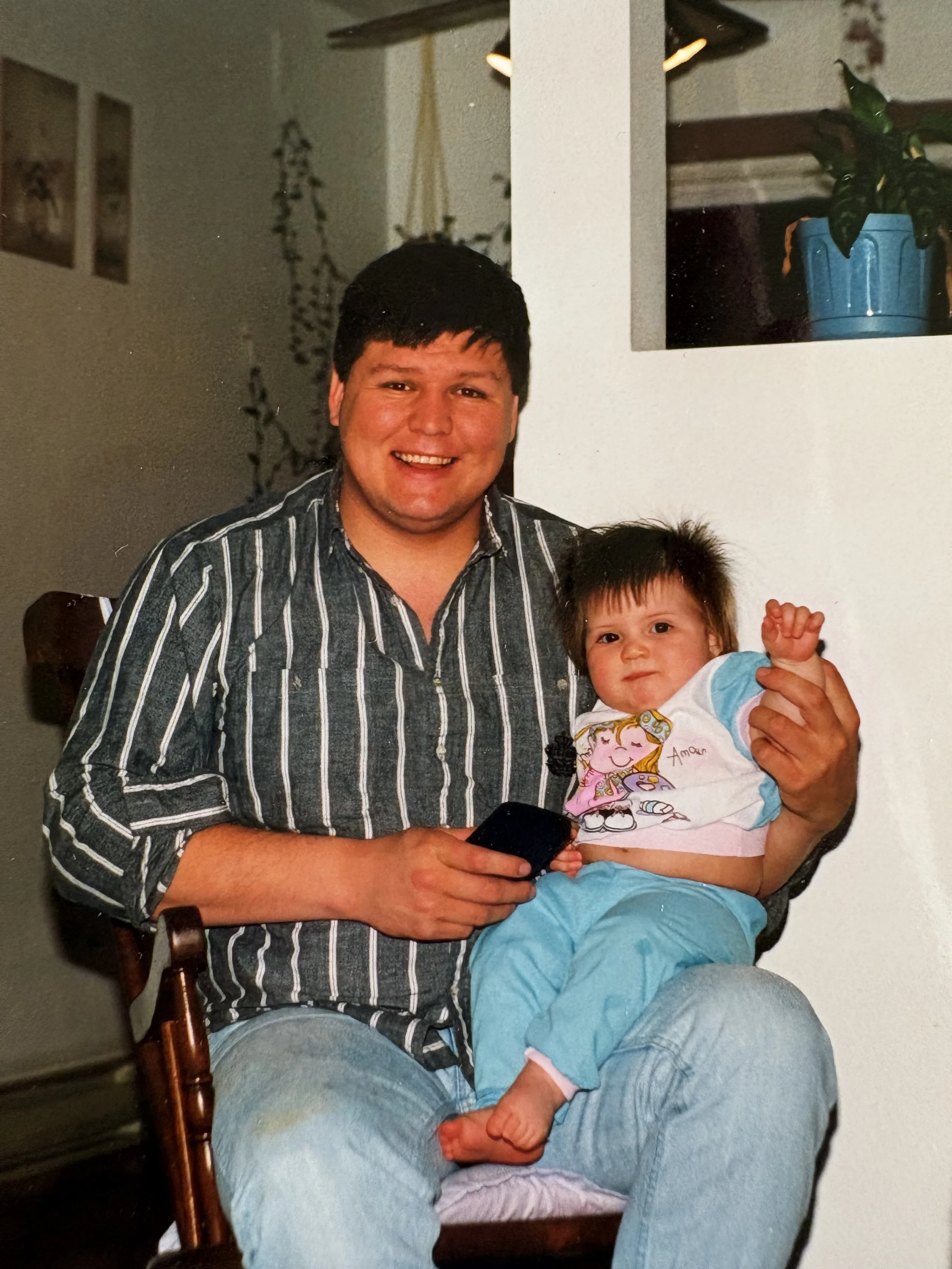
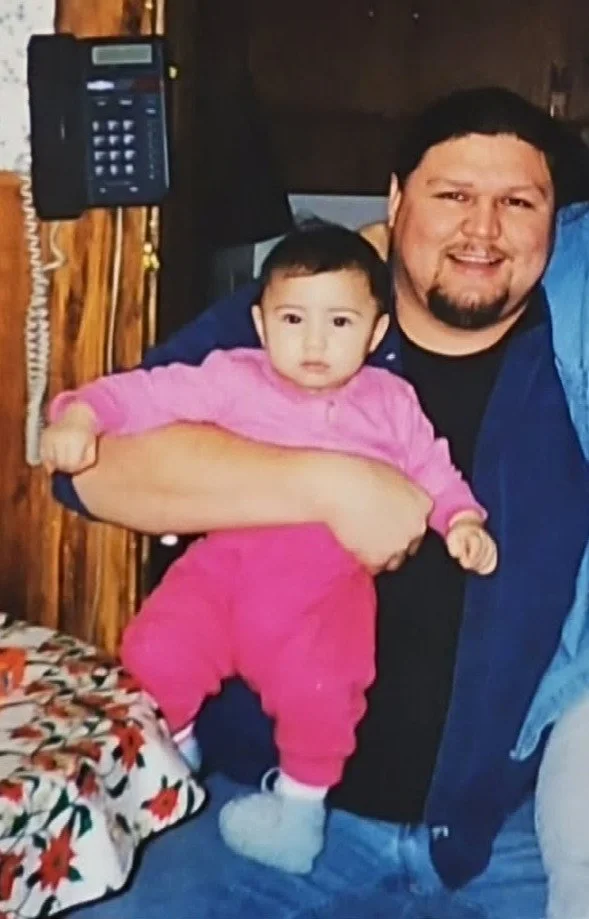
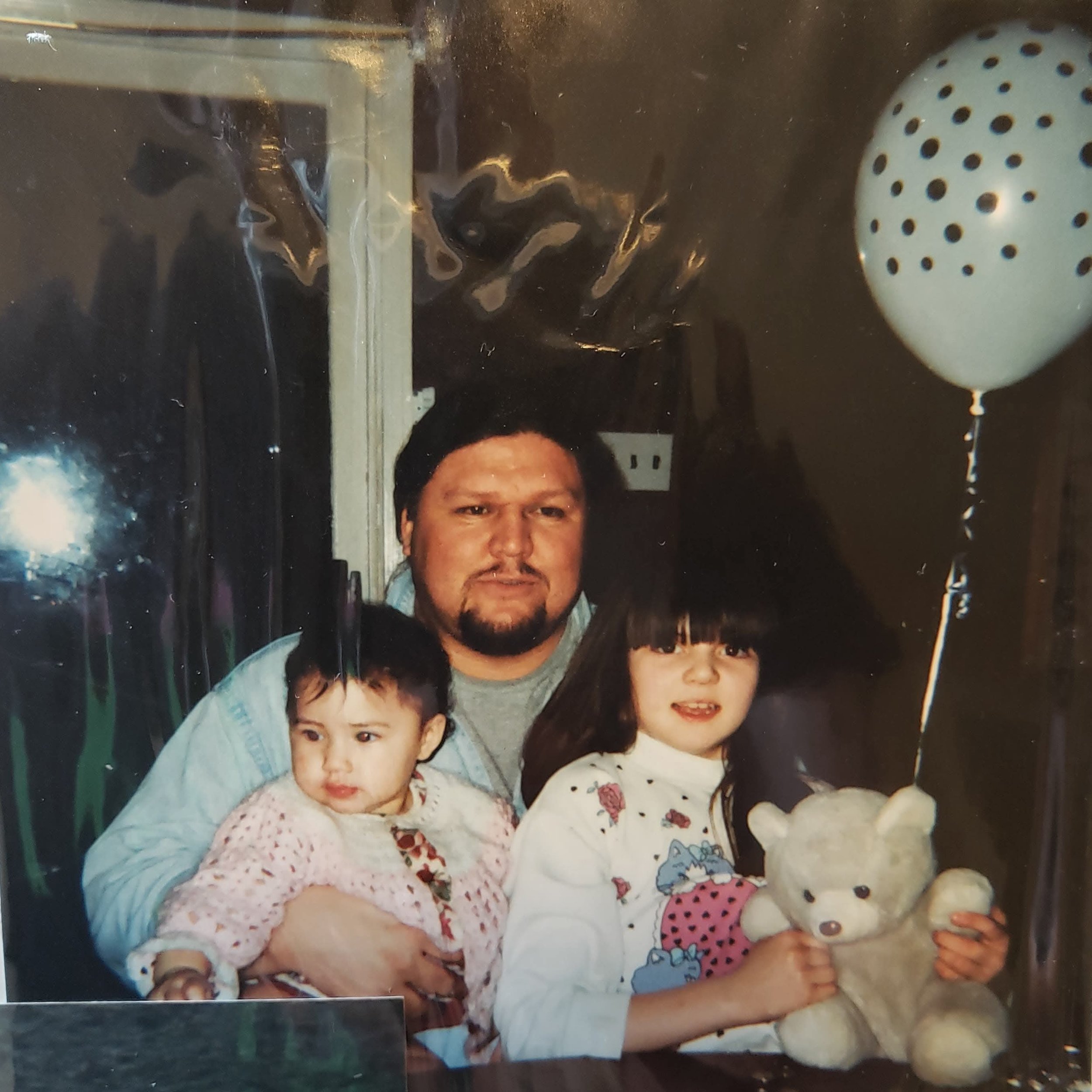
Like many Indigenous families, ours has been shaped by both strength and hardship. Following the passing of his father in 1991, Damien faced personal struggles with addiction that profoundly affected his life and his relationships. His marriage ended, and although distance became a part of his family life, he remained connected to his daughters, Kristien and Brooke, through visits, phone calls, and the knowledge he shared.
Damien's relationship with his daughters was not always easy. Addiction often creates challenges that are felt by entire families, and ours was no exception. Despite those difficulties, Damien never lost his love for his Mi'kmaq culture or his passion for creating art. Through conversations, stories, and his artwork, he shared pieces of his knowledge, creativity, and cultural teachings with his daughters.
Kristien, Damien's eldest daughter, was inspired by those teachings and continues to honor her Mi'kmaq heritage through her own artistic journey. Today, she creates traditional Mi'kmaq jingle dress regalia, fancy shawl regalia, and ribbon skirts while also drawing and painting. She continues to learn from the Elders and Knowledge Keepers around her, carrying forward both her father's artistic influence and the teachings she has embraced throughout her own life.
Brooke, Damien’s youngest daughter, also maintained a connection with her father throughout the years. Brooke resides in New Brunswick, and embraces her cultural teachings. Although her relationship, like Kristien's, was often separated by distance, she recognized the importance of his artwork and the cultural legacy he hoped to leave behind. She is grateful for the opportunity to help make her father’s pieces available so others can appreciate their beauty, craftsmanship, and the culture they reflect.
Together, Kristien and Brooke believe that their father's artwork represents far more than a collection of paintings. His work preserves Mi'kmaq stories, legends, wildlife, traditions, and the deep spiritual connection between the Mi'kmaq people and the land. His paintings capture a perspective that deserves to be remembered, appreciated, and shared with future generations.
When Damien was creating his artwork, the digital world we know today did not yet exist. There was little opportunity to preserve or showcase his work online, leaving much of his artistic legacy unseen beyond those who knew him personally. As the executors of Damien's estate, Kristien and Brooke made the decision to create this website to preserve his artwork, celebrate his achievements, and make his collection accessible to people around the world.
This website is not intended to tell only one part of Damien's story. It honors the whole person—his accomplishments, his struggles, his love for his culture, and the incredible talent he expressed through his art. Like many Indigenous people, Damien's life was complex, but his artwork remained one of the things he was most proud of. Through every painting, he shared a part of himself and the culture he loved.
Our hope is that visitors will see beyond the canvas and discover the stories, teachings, and spirit woven into each piece. By preserving and sharing Damien's artwork, we honor not only his legacy but also the resilience of our family, our community, and the enduring strength of Mi'kmaq culture. We hope his work continues to educate, inspire, and create connections for generations to come.
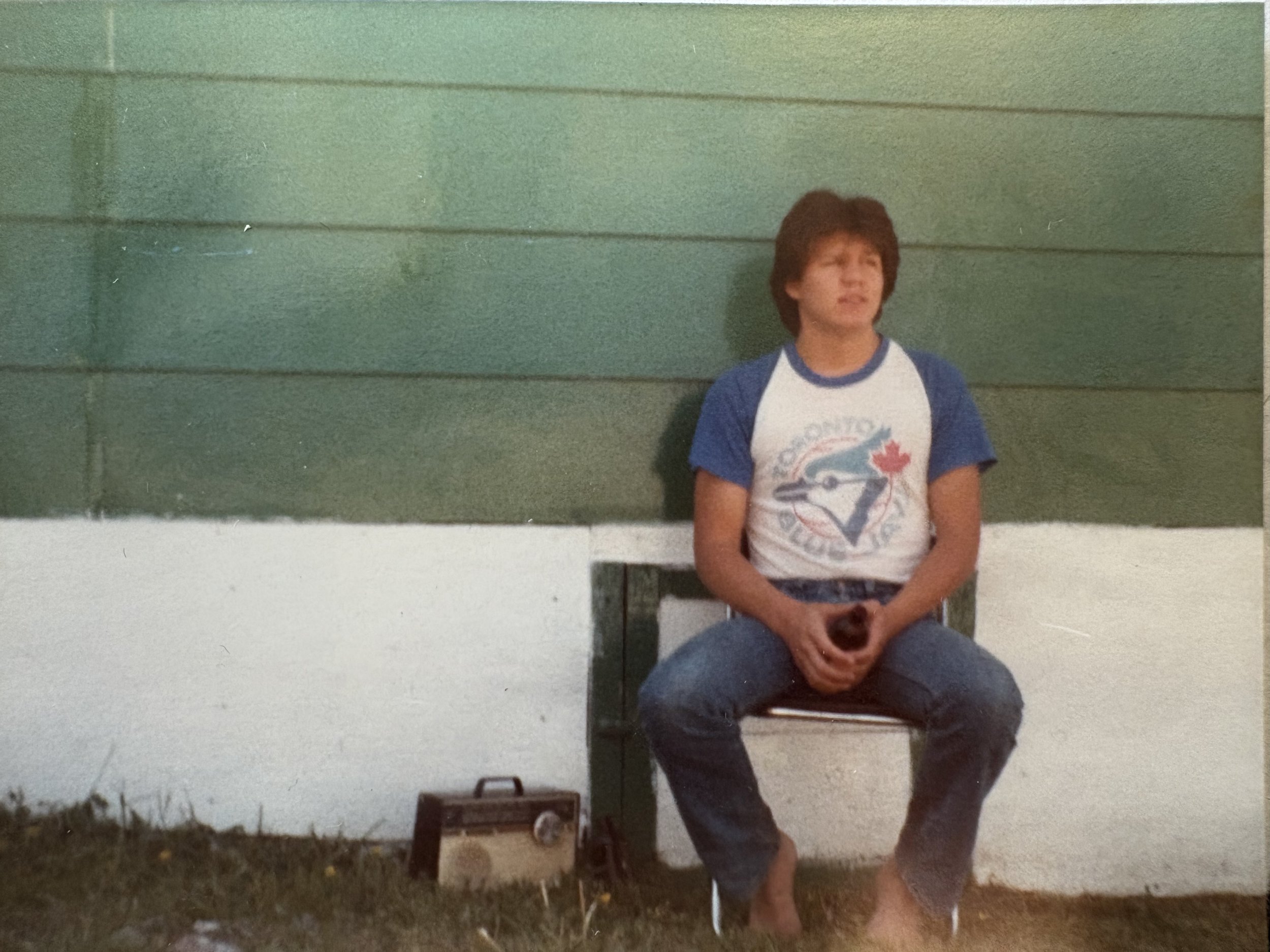
This website began with a simple thought while I was driving across Newfoundland.
As I traveled across the province one Friday afternoon, I found myself thinking about my dad and his artwork. I realized that if someone searched for Damien Hinks online, they would find very little about the artist he was. In fact, the only thing that appeared was the announcement of his passing. It struck me that an artist who dedicated so much of his life to sharing Mi'kmaq stories, traditions, and culture deserved to have his work seen and remembered.
Growing up, my father taught me about our culture through his stories and his art. He was an incredible storyteller, bringing Mi'kmaq legends and history to life in a way that captured my imagination. He taught me how to draw, encouraged my creativity, and shared his love for our people. To me, he was always "Big Bear." Every goodbye ended the same way, with him asking for one of his "Big Bear hugs."
Our relationship was not simple. Addiction created distance between us, and as I grew older, our visits became less frequent. Most of our contact was through occasional phone calls and yearly visits that stopped occurring after my dad moved to Alberta. He had always asked me to go visit him, but by that age, I knew the lifestyle he lived and I was too nervous to commit to a visit that involved me traveling so far from home. When I was a young adult, I carried a great deal of anger and hurt because of his addiction. When he passed away from cancer in April 2021, I learned only a few days before his death that he was even sick. I was under the impression that he was having issues due to his leg amputation, it was discovered too late that my father had a cancer that was spread too far, and ultimately as quickly as it was found, it took his life. I was left grieving not only the loss of my father, but also the relationship I wished we could have had.
In the years since his passing, I have begun reconnecting with my Mi'kmaq culture through Elders and Knowledge Keepers. I wanted to learn what I had missed growing up so that I could one day pass those teachings on to my own daughter. I knew a bit about my culture from living on our reserve and having parts of our school curriculum focus on our cultural identity and language, but that knowledge was shadowed by years of shame and bullying from those who did not want to accept our people. At a young age I felt shame for being Mi’kmaq, but it was through my father’s stories that I stayed connected to it. I drifted from it as a late teen, but now as an adult, I wanted to know more. Through healing, therapy, my mother's stories, my cousins' memories, and my own experiences, I came to understand something I had struggled to see for many years: my father always loved me. His addiction often stood in the way of showing that love, but it never erased it.
After he passed away, I discovered something that confirmed what my heart was slowly beginning to accept. Tucked safely inside his treasured art portfolio was a drawing I had mailed him as a little girl. I had drawn it on the back of Christmas wrapping paper. He had carried that simple childhood drawing with him for more than twenty years. It reminded me that even when we were apart, I still held a place in his heart.
The last time I saw my father was when he visited me at my hair salon, a year before he passed. We did not say much that day, but before he left, we shared one last Big Bear hug. Looking back, I am grateful that it became our final goodbye.
As I drove that Friday, the idea came to me that my father's artwork deserved to be shared with the world. He created paintings that celebrated Mi'kmaq culture at a time when being openly Indigenous was often met with prejudice rather than pride. Like many Indigenous people of his generation, my father experienced racism from an early age. While attending day schools away from home, he endured discrimination and mistreatment simply because he was Mi'kmaq. Despite those experiences, he continued creating artwork that celebrated our stories, our traditions, and our connection to the land.
I quietly asked my dad that day, if he was listening, to give me a sign that I was on the right path.
For several years I had been hoping to find feathers for regalia that I was making for myself and my daughter. In Mi'kmaq culture, feathers are not something you buy or ask for. They are gifts that come when the time is right, either offered to you or found.
About twenty minutes after asking for a sign, I came across a bird of prey that had been struck by a vehicle. Following the teachings I had learned from my dear friend and Knowledge Keeper, Susan Hill, I respectfully moved the bird near the water, thanked it for its sacrifice, and offered gratitude to Creator. I took several feathers, promising they would be cared for and used with respect.
At first, I believed the bird was a hawk.
The next day, after speaking with my sister Brooke about my idea for this website and receiving her full support, I started cleaning the feather’s with my life partner. I learned that the bird was actually a Great Horned Owl.
In Mi'kmaq teachings, Ku'ku'kwes, the owl, is often understood as a messenger that can move between the spirit world and the living world. A silent traveler of the night, a entity that can see through the darkness. Learning that it was an owl made me wonder if this could have been the sign I had asked for, but I still was not certain.
The following day, while my partner and I were driving home, he suddenly stopped the vehicle and said, "Kristien, there is another bird on the side of the road, I think it is a hawk."
We pulled over, and walked up to the fallen animal. There, along the roadside, was not a hawk, it was another Great Horned Owl, perfectly intact.
In all my years of living in Newfoundland, I had never encountered an owl in the wild until this summer. While traveling along a quad path, shortly before nightfall, I passed a giant Great Horned Owl, perched on top of a boulder. The Owl did not budge, only looked at me as I passed, with his large beautiful eyes. I was in awe of the stunning creature, and I had thanked Creator for allowing me such a beautiful glimpse of this animal. Now, within three days of asking my father for a sign, I had encountered two more.
This time I had tobacco with me. Following our teachings, I placed tobacco in the owl's mouth, on its body, and on the ground where it had taken its final breath. I thanked Ku'ku'kwes for its sacrifice, thanked Creator for the gift, and quietly told my dad that I understood. Whether others see these moments as coincidence or something more, they gave me a profound sense of peace and direction.
When I later shared the experience with my friend and Knowledge Keeper Susan Hill, she told me that this was my sign from my father, and that my story had given her goosebumps. She told me how proud she was of my and how excited she was for the journey Creator has put me on, and told me that sometimes our ancestors have to "slap us in the face with pretty obvious signs" before we recognize the signs they are sending.
To this day, remembering those moments fills me with warmth and gives me goosebumps. Through my own understanding of Mi'kmaq teachings and my personal journey of healing, I believe those encounters were the encouragement I needed to move forward.
Creating this website is my way of honoring my father—not only the artist he was, but the man behind the paintings. It is also a promise to my daughter that our culture, our stories, and our family's history will continue to be remembered.
I hope that when people view Damien Hinks' artwork, they see more than beautiful paintings. I hope they see the resilience of a man who continued creating despite hardship, the strength of Mi'kmaq culture, and the love that can endure even through imperfect relationships.
This is our father's legacy.
And it is my privilege, along with the help of my sister, Brooke, to help share it with the world.
A Daughter’s Journey