Gallery and Stories behind the Artwork
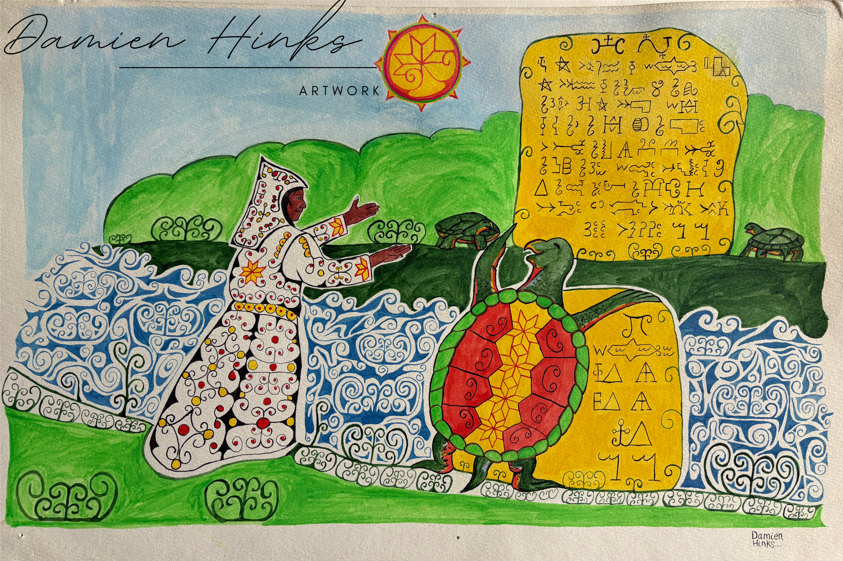
Mi’kmaq Hieroglyphic Prayers
In this print, Grandmother, dressed in traditional Mi’kmaq regalia, is handing down the written Mi’kmaq prayers known as hieroglyphs. In the foreground is the sign of the cross and looking up to the sky, is the Lord’s Prayer. the Mi’kmaq believed in turtle teachings that say the double curve symbolizes life and the star or sun is the giver of life.
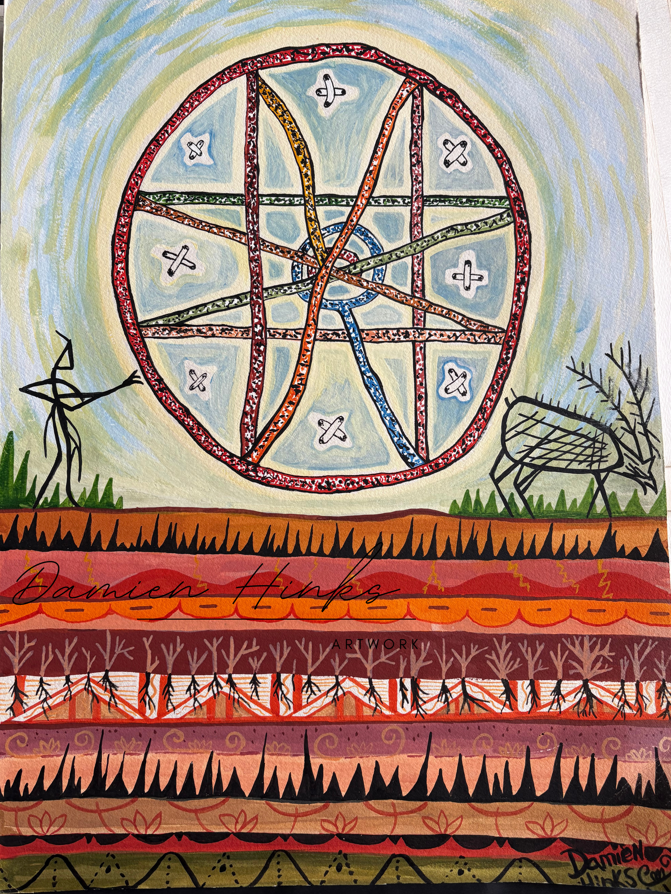
Petroglyph Eight-Pointed Star
This print emphasize the sacred eight-pointed petroglyph star as the giver of all life. The petroglyph is the oldest known Mi’kmaq rock carving dated to be pre-European contact. There is a Mi’kmaq legend that says when sea water is poured onto the star, it will turn brilliant colors and shapes similar to the rocks in Labrador. The linear root pattern represent Mother Earth.
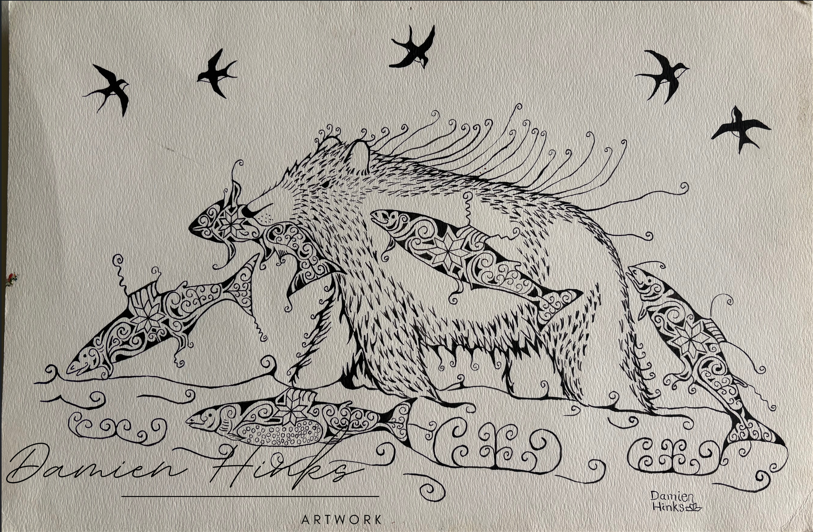
This black and white print depicts the interconnectedness of salmon (plamu) and bear (muin), two important food and life sources for the Mi’kmaq Nation. Sightings of the swallows mark the beginning of a new cycle as they signal the return of the salmon to the river. Mi’kmaq fisherman have been preparing for this time - the Mi’kmaq new year. They offer prayers and thanks to muin, revered as the greatest fisherman for the return of the plamu.
Beginning of a New Cycle
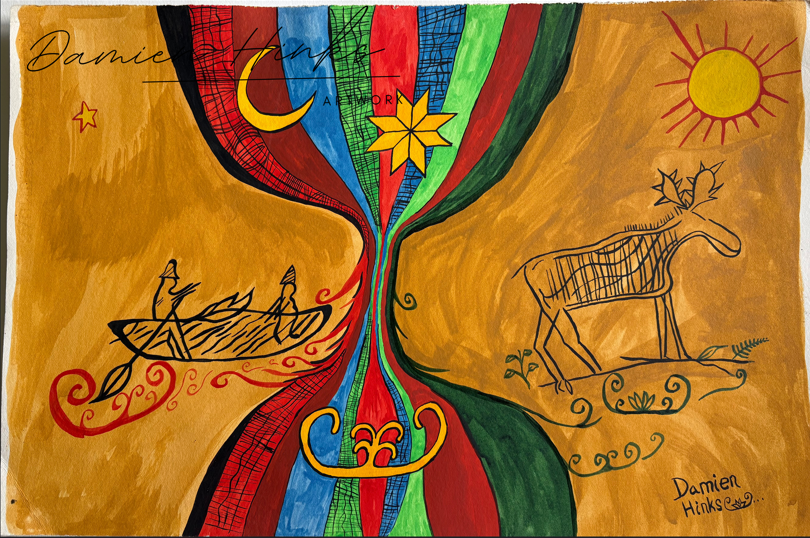
Mi’kmaq Petroglyph Moosehunt
This print portrays the theme of the moosehunt. The Mi’kmaq Nation depended on the moose for clothing and nourishment. The hourglass symbolizes the timeless tradition of the Mi’kmaq
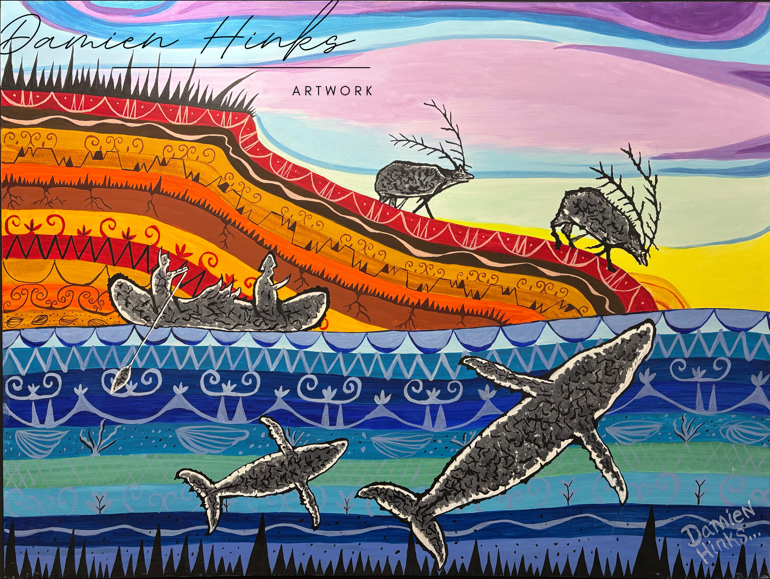
Mi’kmaq Petroglyph Ocean
This print depicts the relationship between the ocean and Mother Earth and the interconnectedness of those who live upon and within. The sacred Mi’kmaq petroglyphs of the whale (a sign of safe travel) and the woman and man in the canoe (honoring the relationship with the ocean for travel and food) and vibrantly colored symbols and design patterns that commonly adorn the dresses of Mi’kmaq women representing important aspects of Mi’kmaq life.
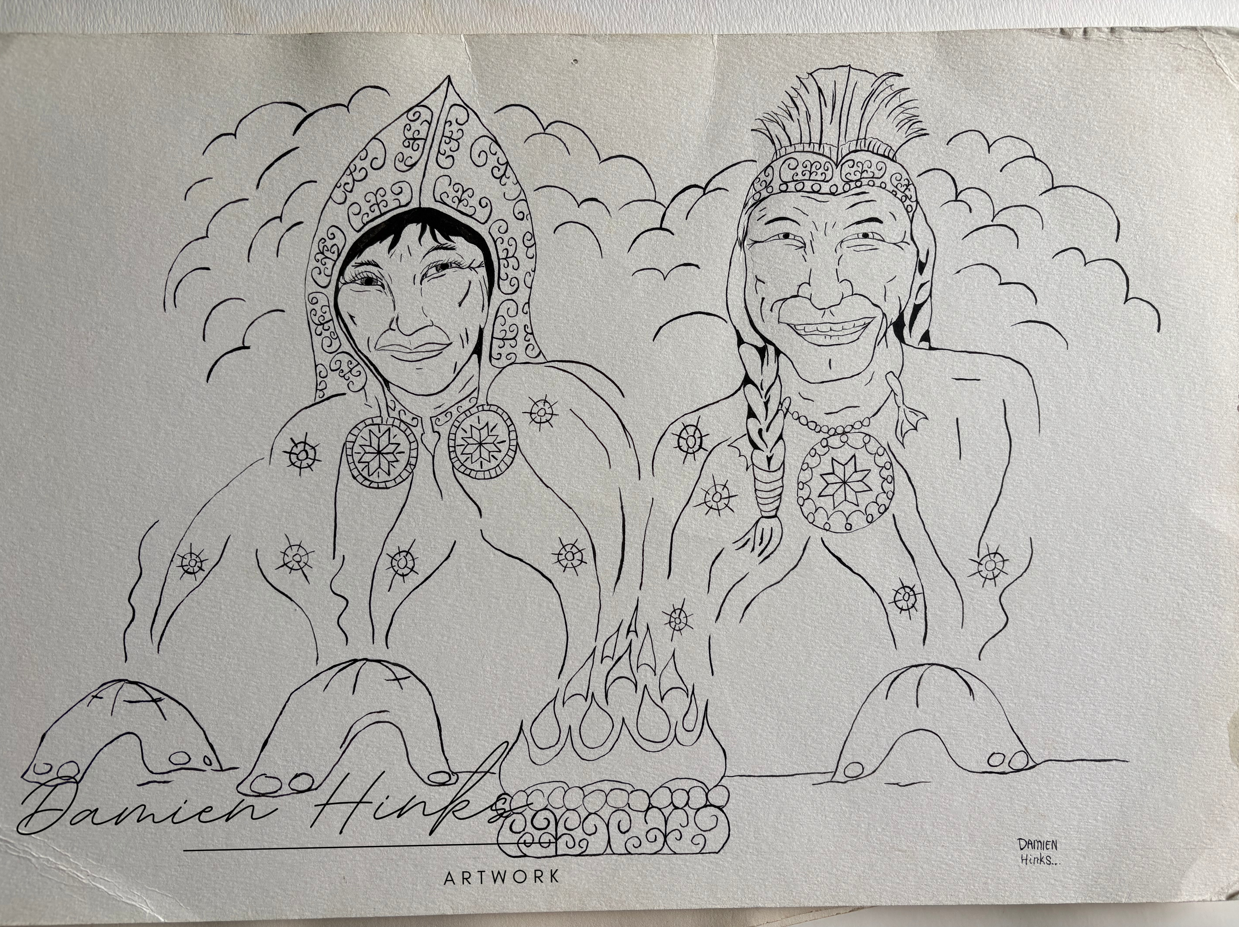
Grandmother and Grandfather Sacred Sweat
This black and white print describes the sacred Mi’kmaq sweat or purification ceremony. First, thanks are given and prayers offered to the four directions. The star-like figures are the good spirits and there is no need to fear. The twelve circles, or fire rocks, represent the Grandfather stones. Grandfather is wearing a Mi’kmaq roach, the traditional headdress of the Mi’kmaq chiefs and the lucky duck’s foot necklace. Grandmother is beautiful in her traditional peaked hat adorned with the double curve symbolizing life.
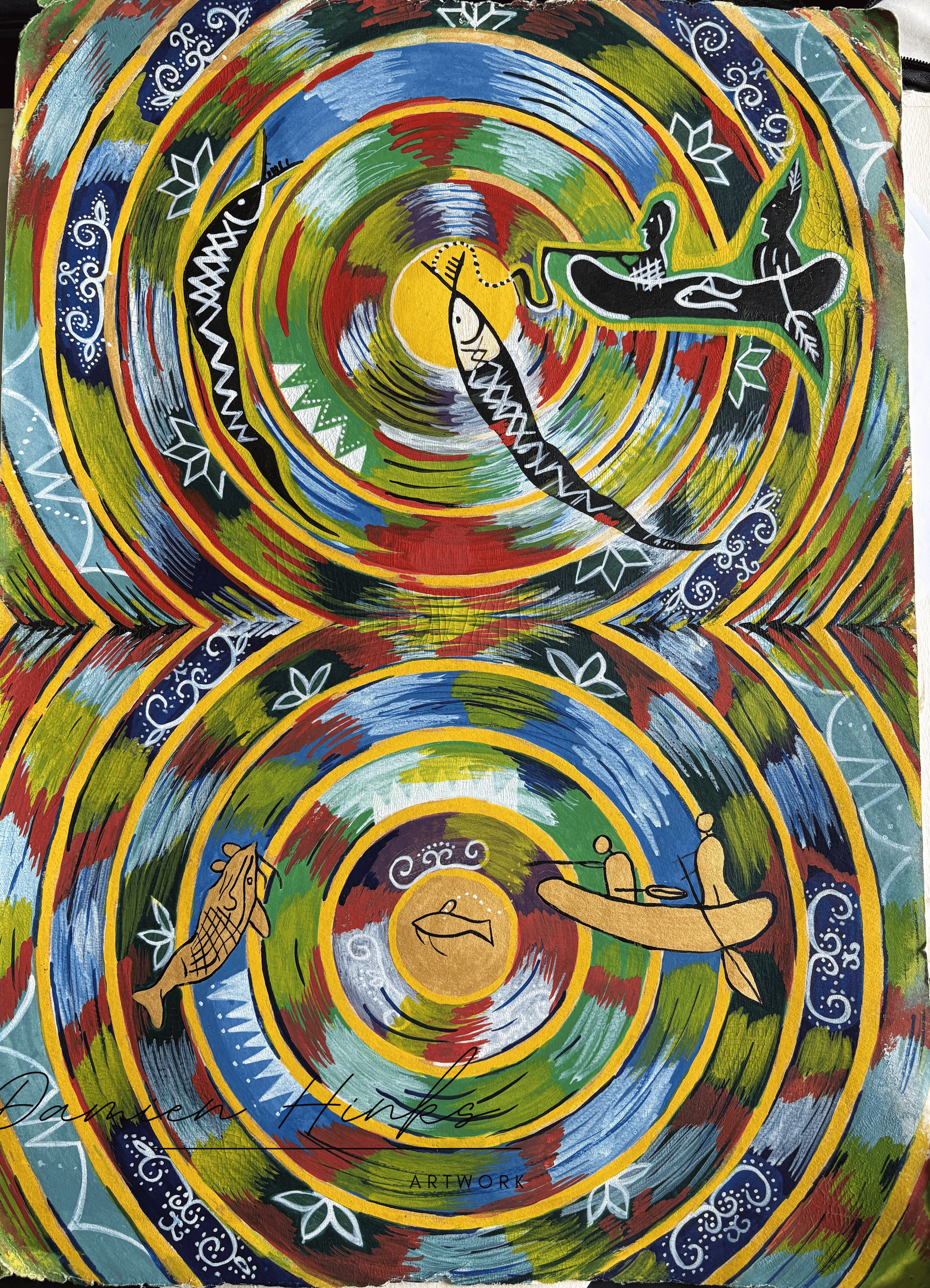
Mi’kmaq Petroglyph Fishing Traditions
This painting illustrates the connection between the traditional Mi'kmaq way of life and the present day. The upper half is inspired by ancient Mi'kmaq hieroglyphs, depicting ancestors travelling by canoe and harvesting from the land and water as they had for generations. The lower half represents present-day Mi'kmaq families who continue these traditions by fishing and travelling the same waters.
The circular design symbolizes the cycle of life and the passing of knowledge from one generation to the next. Although times have changed, the canoe, the fish, and the teachings remain an important part of Mi'kmaq culture. This painting honors the resilience of the Mi'kmaq people and reminds us that our traditions continue to live through those who carry them forward.
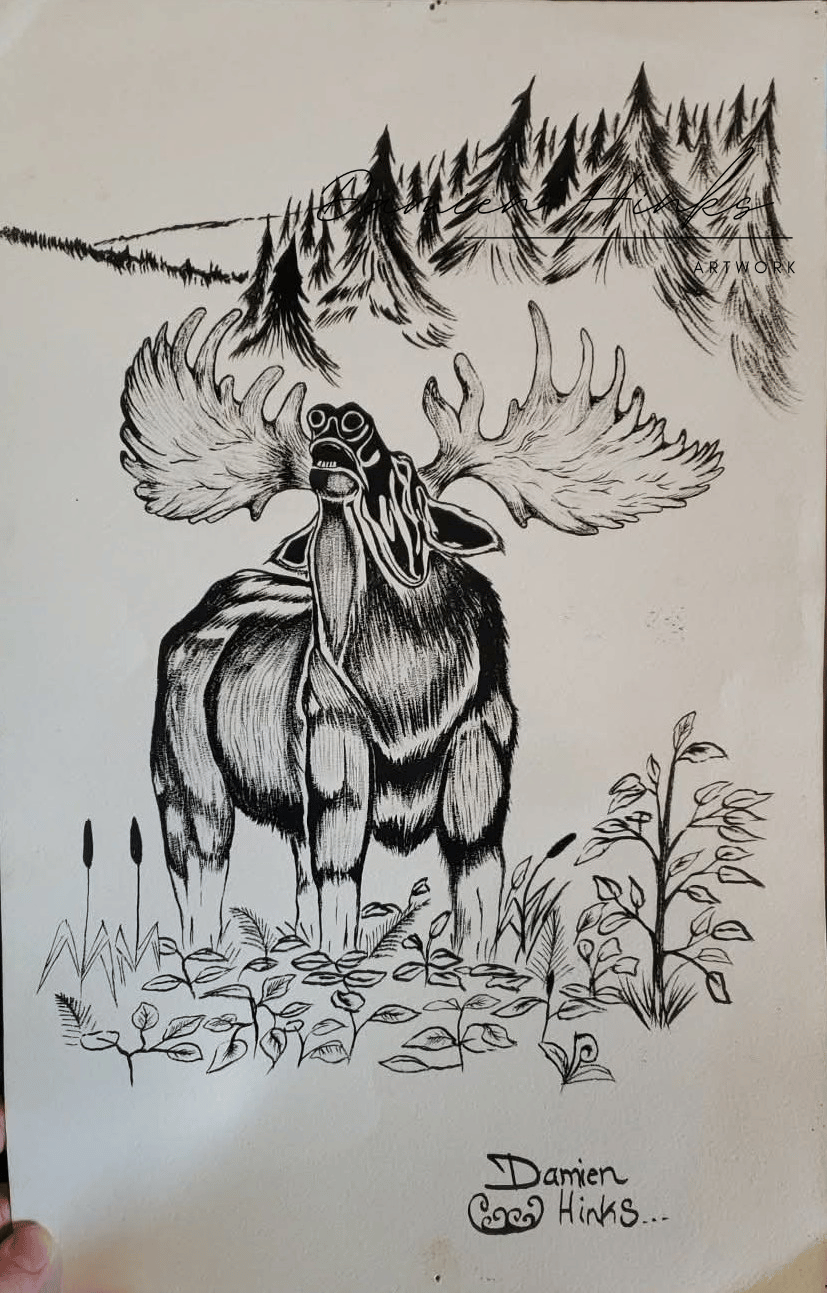
Moose Calling Mate
In this black and white wildlife painting, the moose, respected by the Mi’kmaq Nation as the largest member of the deer family, is calling its mate. The killing of a moose in the ancient Mi’kmaq community meant celebration. A large fire with offerings of berries, plants, and leaves; giving thanks to Tiam (moose) for his role as provider of food, clothing, and tools, would be a meal for his journey to the spirit world.
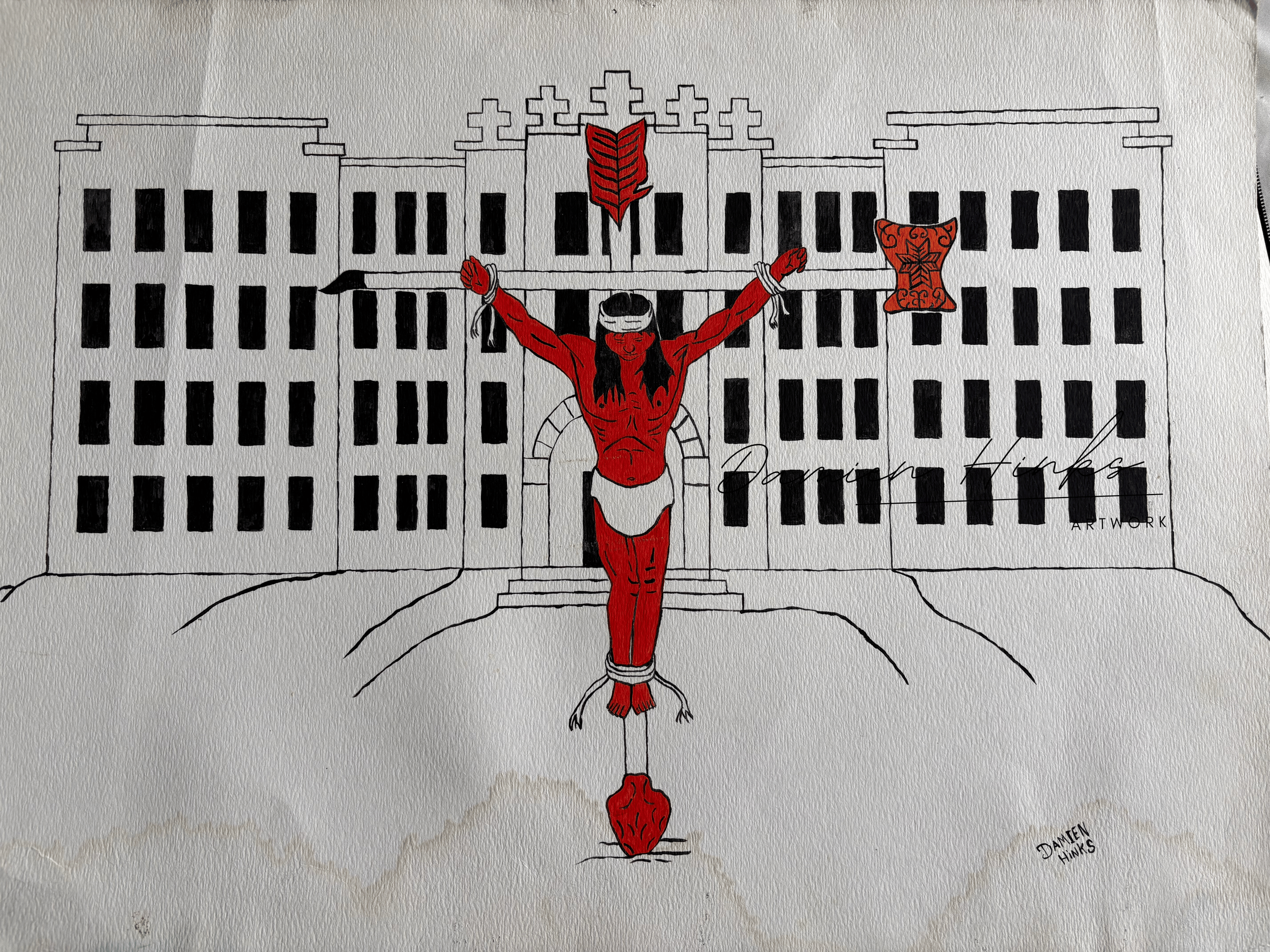
The Residential School
This painting symbolizes the suffering endured by the Mi'kmaq people through the establishment of the Indian Residential School system. The Mi'kmaq figure is portrayed in the likeness of Christ upon the cross, representing sacrifice, suffering, and the loss of innocence experienced by generations of Indigenous children who were taken from their families.
The cross itself is formed by a traditional hunting arrow and a traditional peace pipe. The arrow represents the traditional way of life, while the peace pipe symbolizes the agreements of peace, friendship, and coexistence made between the Mi'kmaq Nation and the European newcomers. Together, they remind us of the understanding that both peoples would live together with mutual respect, without one nation interfering with the way of life of the other.
The construction of the residential schools broke that understanding. Instead of coexistence, Indigenous children were removed from their homes and forbidden to speak their language, practice their ceremonies, or live according to the teachings of their ancestors. The bindings symbolize the absence of choice.
The government building standing behind the figure reminds us that these actions were not accidental, but were carried out through policies intended to replace Indigenous identity with another way of life. Although many traditions were interrupted and many voices were silenced, the spirit of the Mi'kmaq people could not be erased. Through the strength of survivors, Elders, artists, storytellers, and future generations, the teachings continue to live.
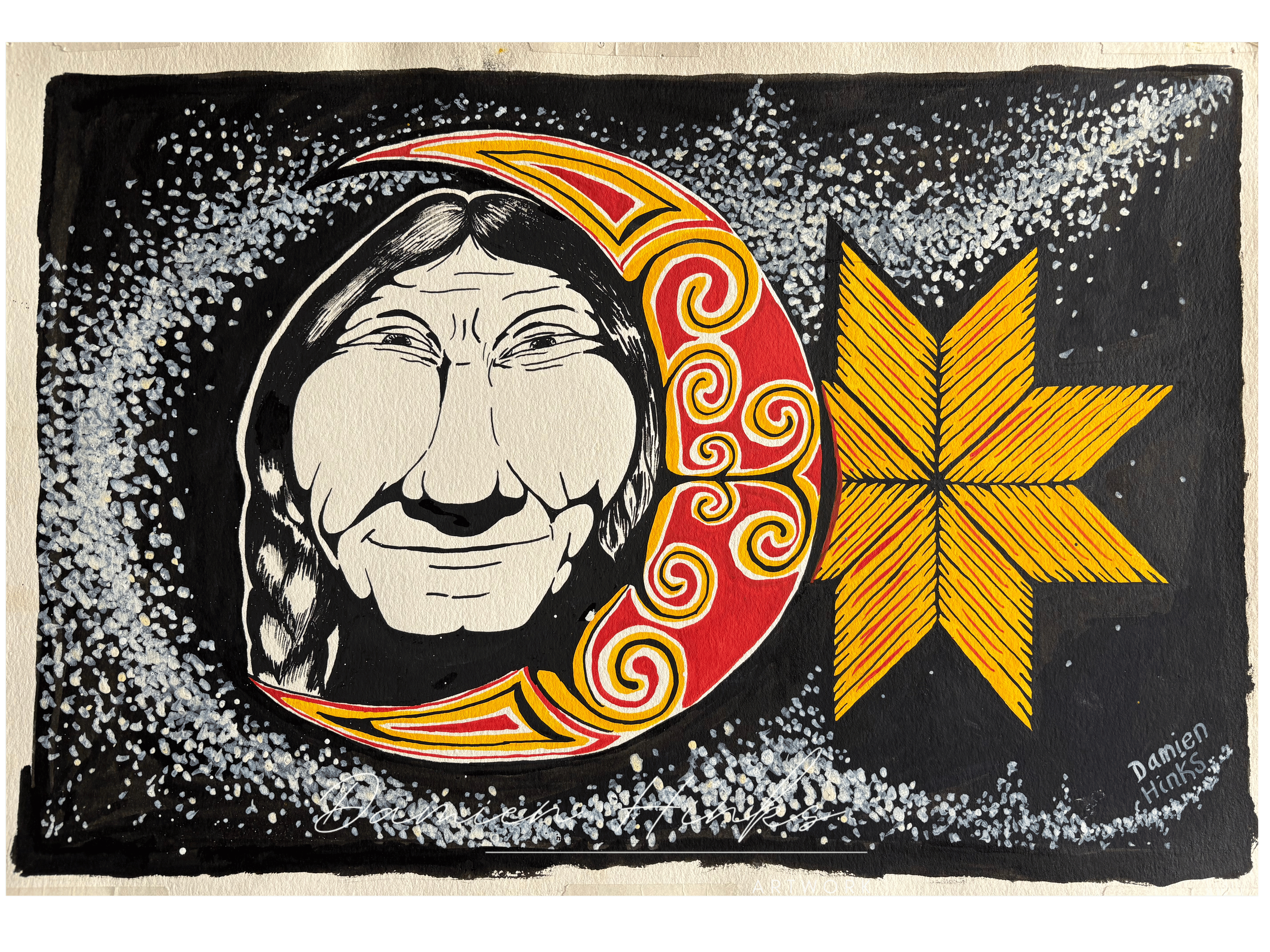
Mi’kmaq Chief Moon
This piece is a painting of the Chief Moon in the night sky, next to the Chief Moon is the traditional 8 pointed Mi’kmaq star. The Chief Moon comes during the time of the winter solstice, when the days are short and the nights are long. The Chief Moon rises high in the winter sky and brings light to the darkness. The light of the winter moon helped guide our people through the long lights and gave hunters light when hunting in the deep snow.
The Chief Moon reminds us of the relationship between the people, the animals, and the land. There is a traditional story of an elderly man and his wife who were starving during the winter. The man called upon the Chief Moon for help. the following day, a moose was found nearby in the deep snow, providing food for them until spring. The moose gave its life so that the people could survive, and the people understood that the animal was a gift that could not be wasted. Chief Moon is a reminder that even during the darkest and coldest time of the year, there is light to guide us.
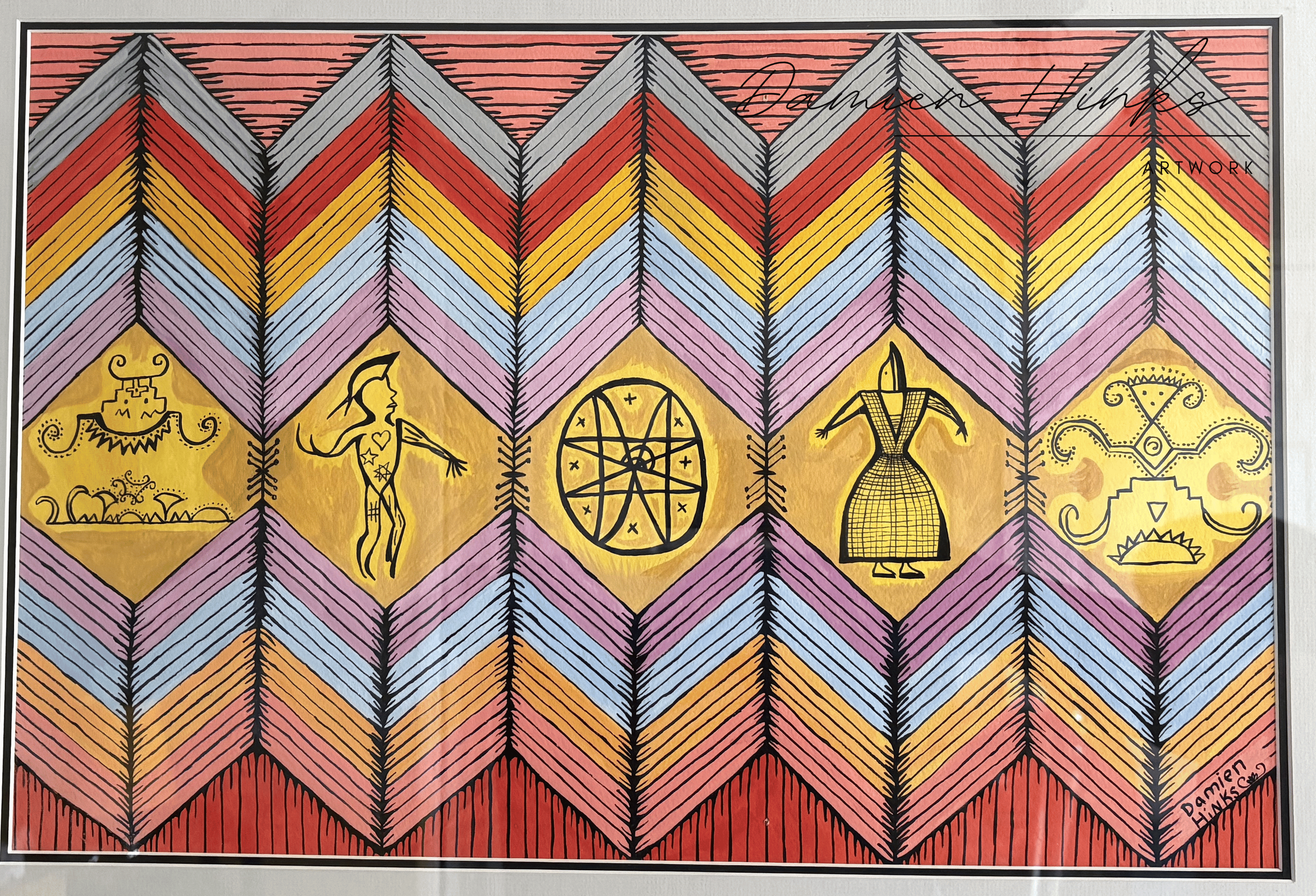
Untitled Painting 1
This painting depicts porcupine quillwork framing 5 Mi’kmaq petroglyph images. Some of the petroglyphs include the eight pointed star, a woman, a man. Further details of this image are unknown as Damien passed before naming this piece.